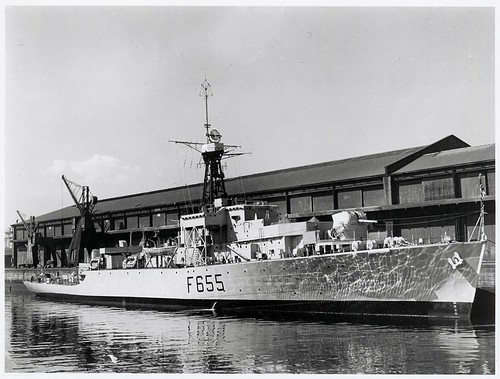
We had an enquiry looking for information about the boiler of the shipwreck of the Renown which ran aground in 1887 in South-West France.
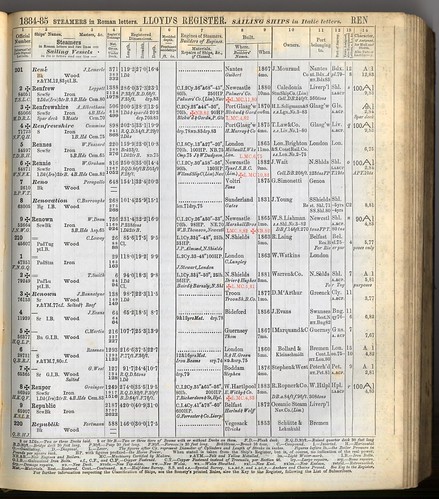
We looked through the Lloyd's register for 1884 which had 9 entries for Renown ships, a mixture of both iron and wooden built. I sent the following scanned image to the enquirer for them to go through and see which of the entries matches their vessel and investigate things further.
One of my favourite images in the Dan McDonald collection is this one of the Lord of the Isles with rowboats going out to it.
The image today shows the same vessel on the Clyde I think from a different angle.

Specification details available from Clydebuilt database here.
A little whimsy for a Thursday afternoon with a step back in time to the glamour of ocean liners in the 1960s. This website celebrates the 50th anniversary of the launch of The France which was the longest passenger ship ever built at the time of her launch in 1960. She was built at the Atlantic yard in Saint-Naizaire by the Compagnie Générale Transatlantique which has connections to John Scott of Scott Shipbuilding and Engineering.
The company ordered its first three ships from the Greenock yard of John Scott and in 1861 asked him to establish a shipbuilding yard for them at Saint-Nazaire-Penhoët. By 1863 Scott was employing 1,800 workers at the new yard
The website has a beautifully designed interactive cross-section map of the ship here which if you zoom in allows you to click on the different sections and see images of the rooms and facilities of the ship all decked out in great modernist style.

The website is part of the National Maritime Museum of France and there is an exhibition on the liner at the Paris museum until 23 October 2011.
Today's photograph is of the Logan, a mystery vessel to me at least. We have 6 images of the Logan on flickr but I've been unable to find much information about it other than it was built by Swans, Maryhill in 1920.

Today's photo is of the Lairdsgrove.

Built by A & J Inglis, Pointhouse in 1898 for the Burns and Lairds Line Ltd. Information about them below taken from here.
This shipping line was an amalgamation of two Glasgow companies that had pioneered steam services between Scotland and Ireland. George Burns had been involved in the development of steam shipping around the British coast; his brother James remained a provision merchant. Their company was known as G. & J. Burns from 1842. Alexander Laird was a shipbroker working with various steam packet companies running from Greenock. From 1868 Alexander A. Laird & Co. became sole agents for the Glasgow and Londonderry Steam Packet Company. This became the Glasgow, Dublin and Londonderry Steam Packet Company Ltd in 1885 also known as the Laird Line, a name formally adopted in 1906.
Laird Lines joined Coast Lines Group in 1919 followed shortly afterwards by G. & J. Burns Ltd on the death of the founder's son John Burns. The company name, the Burns & Laird Line was adopted in 1922. The company livery combined the Burns house flag with Laird's funnel. The Coast Lines Group succumbed to competition from road transport during the 1960s and was taken over by P&O in 1971. Coast Lines two Irish Sea services were amalgamated under the name Belfast Steamship Co. Ltd. The last vestige of Burns and Laird disappeared in 1976.