This week's Friday Photo is a copy of a line drawing of 'Coriolanus' a 3 masted iron ship, built by Archibald McMillan & Son in Dumbarton. It was built in 1876. This lovely plan, found by our volunteer Craig Osborne, is part of the Phil Thomas collection. Below are some images of the ship, where the detail on the plans can be clearly seen. The ship was laid up in 1932.
This week's Friday photo is one of the glass negatives from the Dan McDonald collection, which was digitised earlier this week by one of our volunteers, William Brown. The Dan McDonald collection is permanently held with the Trust and was bought by Bill Lind in 1996. The collection contains over 6,500 images of ships, vessels and places along the Clyde and west coast of Scotland (c.1920-1980).
This particular negative is of 'Glenclova' a steel sailing vessel 4 Mastered Barque in the Tasman sea, a little further afield than the Clyde and west coast of Scotland! This ship was built by Charles Connell & Company, Glasgow in 1893. This isn't one of Dan's own images but one that is part of his larger collection.
Back in October we organised and shifted close to 10 tonnes of engineering plans. These were drawings relating to about 8 different engineering companies based in the North-East of England. They had come to the Ballast Trust along with other material for the Kincaid’s collection that had been cleared out of the premises of Clark Kincaids in the early 1990s.Following discussions with colleagues at Tyne & Wear Archives & Museums, we had agreed that these items would be much better placed with them as a repository that is local to where those companies operated.
They sent up a great driver who amazingly drove all the way up from Newcastle, spent 3 hours loading plans and then drove all the way back down! You can see what they have done since with the plans (including some snazzy and essential freezing of the plans) and find out more about how they fit into their shipbuilding and engineering collections here.
To celebrate Burns Night, we have these lovely Burns Supper menus taken from the Stewarts Rambling Club book (Ref SL247/3/1/1) that is part of the George Stewart & Co. Ltd collection.
The example I've scanned is from 1903 and the menu has an illustration of Burns' cottage on the front. The club seemed to have held regular Burns suppers as well as going for rambles. This collection has now been catalogued and will be returned to Edinburgh City Archives this spring.
Today's photo is an unusual one for us compared to the normal ship photos. It is an image of the engine room of the PS Caledonia, built by William Denny & Brothers, Dumbarton, Yard no. 1266.
Today's photo is a deck shot of passengers on board the SS Davaar, a passenger/cargo vessel built by London & Glasgow Engineering & Iron Shipbuilding Co. in 1885.
The ship was used by the Campbeltown and Glasgow Steam Packet Joint Stock Company.
There is a history of the company written by P Donald M Kelly available online
Today's Friday photo is an image of a Midship Section plan that is part of the collection of plans we have for the British Corporation.
We have scanned it so that it can possibly be used in our 25th anniversary publication which will be published by the end of the year.
The plan is stamped A & J Inglis, Glasgow with a date in 1897, the ship number given is no. 246 and this turns out to have been the SS Magpie built for G & J Burns Ltd to run across the Irish sea.
She was renamed as the Lairdsgrove in 1929 and ended her days as such. The image below is from our flickr and part of the Dan McDonald collection.
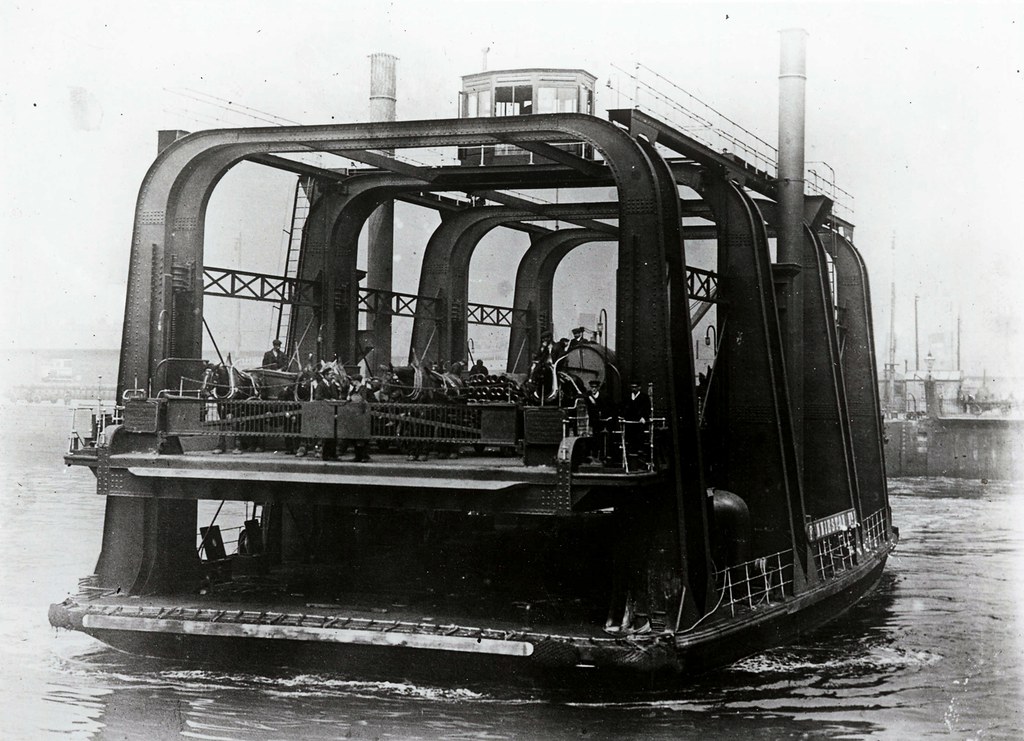
Today's photo is of the Finnieston Vehicular Ferry carrying horse drawn vehicles.
The Clyde had several ferry crossings, including:
- York Street Ferry (York Street to West Street)
- Clyde Street Ferry (Clyde Street, Anderston, to Springfield Quay)
- Hyde Park Ferry (Hydepark Street to Springfield Quay)
- Stobcross Ferry (Finnieston Quay to Mavisbank Quay)
- Finnieston Ferry (Finnieston Quay to Mavisbank Quay)
- Kelvinhaugh Ferry (Yorkhill Quay to Princes Dock)
- Govan Ferry (Ferry Road, Partick, to Water Row, Govan)
- Meadowside Ferry (Meadowside Street, Partick to Holm Street, Govan)
- Whiteinch Ferry (James Street, Whiteinch to Holmfauld Road, Linthouse)
- Renfrew Ferry (Yoker to Renfrew)
- Erskine Ferry (Dunbartonshire to Renfrewshire)
Thanks to this site for the information. We have images on our Flickr of the Govan Ferry, Renfrew Ferry and Finnieston Ferry.
For today's photo I couldn't resist this random but wonderful image of a Penman's boiler being loaded/unloaded? onto a boat.
The records of Penman & Co. Ltd are held by Glasgow City Archives. At the Ballast Trust we have a collection of job files that we will be processing and adding to the existing collection TD244.
From the SCAN entry for Penman & Co.Ltd:
The Glasgow firm of Penman & Co, boilermakers, Caledonian Iron Works, was established around 1870 and by 1900 occupied a three-acre site at its Caledonian Iron Works in Strathclyde Street, Bridgeton (built 1889). The firm was incorporated in 1907 and from 1920 was owned by Babcock & Wilcox. It specialised in land boilers, which were exported worldwide.
Today's photo is from a selection that I had printed to decorate our newly refurbished office space. It shows paddlesteamers queued up to take people 'doon the watter'.
Although this photograph was taken in May that year, I thought this was appropriate for the end of the Glasgow Fair Fortnight when Glaswegians in the past traditionally took a trip down the coast on paddlesteamers.
Today's photo comes from a set uploaded from a box of miscellaneous photographs from John G Kincaids. The image below is of the K23 engine.
The engine was fitted in the CLAN MCDONALD built by Greenock Dockyard Co. The collection belongs to Glasgow City Archives.
More images from Kincaids are available on our flickr pages.
The engine was fitted in the CLAN MCDONALD built by Greenock Dockyard Co. The collection belongs to Glasgow City Archives.
More images from Kincaids are available on our flickr pages.
Today's Friday photo is from a set of images we have for James Lamont Yard at Port Glasgow. This image of of the mould loft.
This week I've added a few images from the Lamonts folder to the Yards set on Flickr. There are a few images in the collection with descriptions and dates on the back so I have used them where available.
This collection is part of one of Bill's personal collections at the Trust and it comes from a few filing cabinets full of prints of ships and yards that he collected over the years. There is a whole drawer full of images from different shipyards and engine works and I've decided to make this my next project for uploading a selection of them to Flickr.
This week I've added a few images from the Lamonts folder to the Yards set on Flickr. There are a few images in the collection with descriptions and dates on the back so I have used them where available.
This collection is part of one of Bill's personal collections at the Trust and it comes from a few filing cabinets full of prints of ships and yards that he collected over the years. There is a whole drawer full of images from different shipyards and engine works and I've decided to make this my next project for uploading a selection of them to Flickr.
The records of James Lamont & Co. are held by Glasgow University Archive Services.
We are at the start of being redecorated so I'm unable to continue with the images of yards and workshops as planned because our scanner has been packed away. Instead here are some images from the Dan McDonald collection taken in either Holland or Belgium in August 1930.

Although Dan McDonald's collection is best known for his images of ships. There is also a series of views of places and we have been uploaded some of these images to our historypin channel.
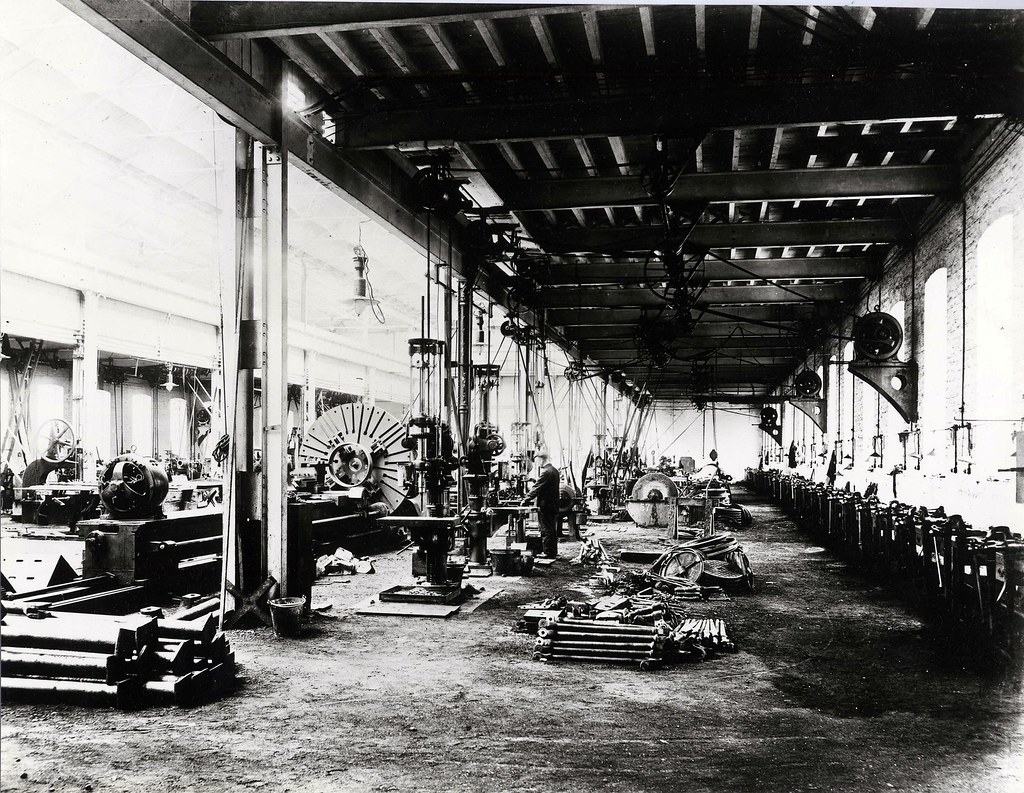
Today's Friday photo is from a set of images we have for Beardmore's Dalmuir Yard. One of the things we inherited at the Trust from Bill are a few filing cabinets full of prints of ships and yards that he collected over the years. There is a whole drawer full of images from different shipyards and engine works and I've decided to make this my next project for uploading a selection of them to Flickr.
So there is now a Yards set on Flickr that I'll be adding to each week. This week I've added a few images from the Beardmore folder. The problem with this collection is that it hasn't been catalogued so the information I have for each image is pretty scant. However, I'd recommend looking at them on Flickr at the largest size you can as the detail in them is amazing.
Here's what I do know about the images - they must have been taken before 1936 (as that was when the Dalmuir Yard was closed) but some could also be of the iron and steel works at the Parkhead Forge in the eastend of Glasgow.
The records of William Beardmore & Co. Ltd are held by Glasgow University Archives. If you want to know more about the company, there is a nice factsheet on them by West Dunbartonshire Council here.
It has been a busy few weeks here at the Ballast with a clear-out and reorganisation. So I'm afraid the Friday photos have slipped. However here is an image that we've scanned in for our Director to potential use in his book.
This is an image of one of the four 10,000 ton cargo motor-ships that were built by Doxford & Sons in Sunderland for Thomas & James Harrison of Liverpool.
Here at the Ballast Trust we have a processed a collection which belongs to Glasgow City Archives. It is the papers of R McAlister & Sons, Yachtbuilders based in Dumbarton.
It is a lovely collection, a great example of the work of a smaller firm of boat and yachtbuilders founded in 1857 to build small boats, including racing boats, gigs, canoes and other oared craft which were the main output of the firm. By 1886, expansion of the business meant that McAlister now built sailing yachts, lifeboats, steam yachts and launches. In May 1911 McAlister entered into an arrangement with Mr Valdemar Engelhardt (a Danish captain) to build his collapsible lifeboats and make the McAlister yard his British headquarters. By February 1912 they had delivered the 4 Engelhardt lifeboats that the Titanic carried which they built.
This image on the right of Order Book no. 4 (ref TD1347/10/14) that contains the order for the four lifeboats. You can see some images of the boats at the end of the pages here (fig 5 and 6) which discuss the development of the Englehardt Collapsible Lifeboat.
The page from the order book is shown below. It notes that the order is for Messrs Harland & Wolff Ltd Belfast for vessel no. 401 for four Englehardt boats measuring 28' x 8'6" x 3'1" to be delivered February 1912. The opposite page then records the dates that the four boats were delivered from Greenock by G & J Burns Ltd.
There is obviously a wealth of information online about the Titanic. One of the advantages of this is that we can see how the four collapsible lifeboats were used. This website records the names of each of the passengers the different lifeboats held and you can click through on their names to find some biographical information about them and details of their journey plans. For example, collapsible lifeboat C rescued Joseph Bruce Ismay, the President of the White Star Line.
The is a larger version of the order image available on our Flickr page. Please contact us if you have any questions about the order book.
It is a lovely collection, a great example of the work of a smaller firm of boat and yachtbuilders founded in 1857 to build small boats, including racing boats, gigs, canoes and other oared craft which were the main output of the firm. By 1886, expansion of the business meant that McAlister now built sailing yachts, lifeboats, steam yachts and launches. In May 1911 McAlister entered into an arrangement with Mr Valdemar Engelhardt (a Danish captain) to build his collapsible lifeboats and make the McAlister yard his British headquarters. By February 1912 they had delivered the 4 Engelhardt lifeboats that the Titanic carried which they built. This image on the right of Order Book no. 4 (ref TD1347/10/14) that contains the order for the four lifeboats. You can see some images of the boats at the end of the pages here (fig 5 and 6) which discuss the development of the Englehardt Collapsible Lifeboat.
The page from the order book is shown below. It notes that the order is for Messrs Harland & Wolff Ltd Belfast for vessel no. 401 for four Englehardt boats measuring 28' x 8'6" x 3'1" to be delivered February 1912. The opposite page then records the dates that the four boats were delivered from Greenock by G & J Burns Ltd.
![]() |
| [click to enlarge] |
- Englehardt collapsible lifeboat A
- Englehardt collapsible lifeboat B
- Englehardt collapsible lifeboat C
- Englehardt collapsible lifeboat D
The is a larger version of the order image available on our Flickr page. Please contact us if you have any questions about the order book.
Found out about ScotRail's Adopt a Station scheme today via the Doors Open Days folks. The scheme finds community or start-up uses for vacant accommodation at ScotRail stations.
Perfect opportunity I thought for some shots of North Johnstone Station plans:
![]() |
| Johnstone Station (click to enlarge) |
![]() |
| Johnstone Booking Office (click to enlarge) |
The data entry part of our pacesetter project has been completed. This means that one of our volunteers has sucessfully inputted around 1500 entries to the Archivists' Toolkit to create an xml file that we will now pass onto the custodial repository for them to transfer to their database.
If that all goes smoothly we will be able to return that section of the collection (all the Caledonian Railway drawings) to the National Archives of Scotland and get on with the measuring, referencing and inputting of the other 1500 drawings.
In other toolkit news, I'm attending a training day on XSLT stylesheets which will help me to customise how the finding aid reports are produced so they can be altered to present the information in more pleasing manner.
An interesting post from Glasgow University Archive Services on their blog about their collection of records for John Hastie & Co. Ltd. Read it here.
There is some more information including this image about the company on this site from the people at the McLean Museum.